| 書目名稱 | Using the STL | | 副標(biāo)題 | The C++ Standard Tem | | 編輯 | Robert Robson | | 視頻video | http://file.papertrans.cn/945/944659/944659.mp4 | | 概述 | Provides a comprehensive introduction and guide to the STL pitched at the level of readers already familiar with C++ *.A thorough overview of the capabilities of the STL,.detailed discussions of the u | | 圖書封面 | 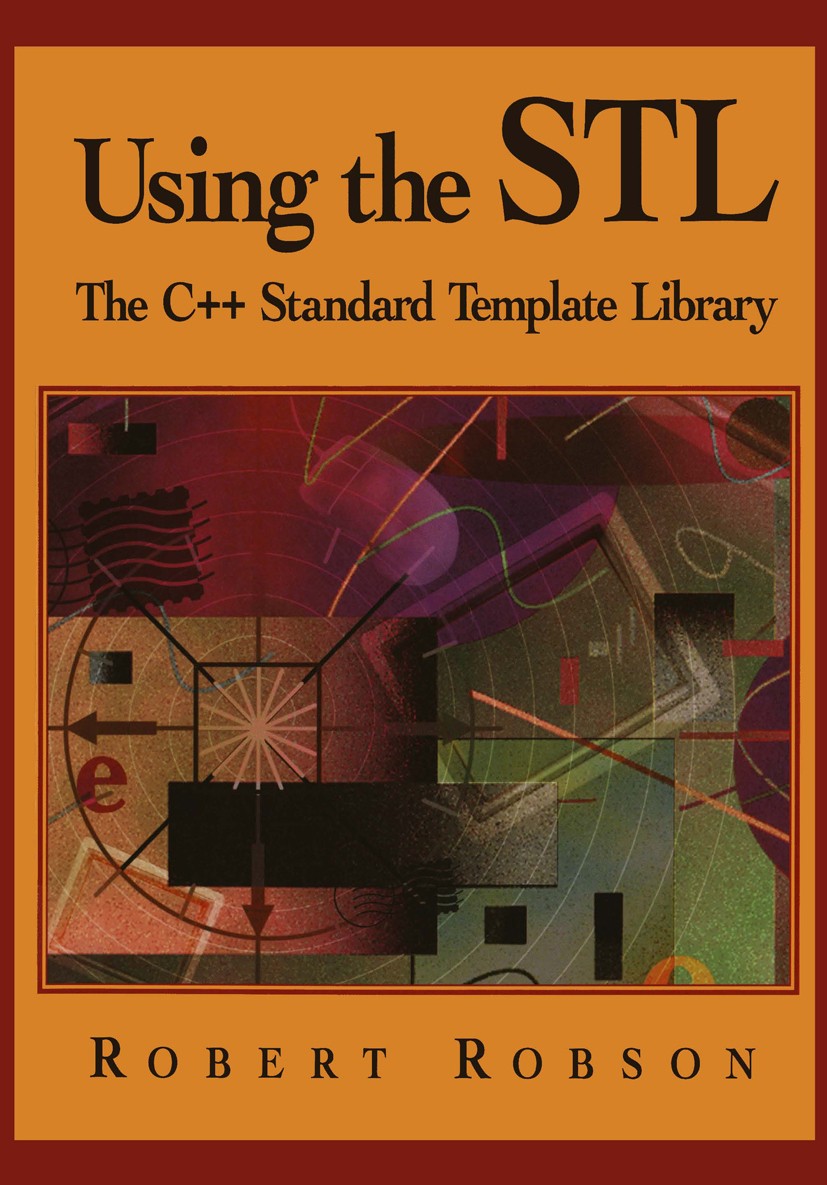 | | 描述 | Programming languages evolve in steps. They began with weakly typed lan- guages like FORTRAN and progressed to strongly typed languages like PAS- CAL. This had the positive effect of moving the detection of many programming errors from run-time to compile-time. Unfortunately, it was soon recognized that it had the negative effect of limiting the generality of functions since they were now bound to a specific data type. This virtually eliminated the writing of reusable software components. The result was that programmers had to re-implement common algorithms and data structures over and over again. Newer languages, like C++, provide a way to decouple algorithms and data structures from the data types upon which they operate. C++ provides this capa- bility via the template mechanism. Suddenly, it became possible to write generic algorithms and data structures that could be reused. In effect, this provides de- bugged software components that can be combined to form programs much faster than by re-implementing the components each time they are needed. At the same time that programming languages were evolving, computer hard- ware was becoming incredibly inexpensive compared to programme | | 出版日期 | Book 19981st edition | | 關(guān)鍵詞 | C++ programming language; Standard Template Library; algorithms; complexity; data structures; template | | 版次 | 1 | | doi | https://doi.org/10.1007/978-1-4684-0531-6 | | isbn_ebook | 978-1-4684-0531-6 | | copyright | Springer-Verlag New York, Inc. 1998 |
The information of publication is updating

|
|


 |Archiver|手機(jī)版|小黑屋|
派博傳思國際
( 京公網(wǎng)安備110108008328)
GMT+8, 2026-1-17 07:43
|Archiver|手機(jī)版|小黑屋|
派博傳思國際
( 京公網(wǎng)安備110108008328)
GMT+8, 2026-1-17 07:43






 發(fā)表于 2025-3-21 19:16:24




