| 書目名稱 | Induced Rhythms in the Brain | | 編輯 | Erol Ba?ar,Theodore H. Bullock | | 視頻video | http://file.papertrans.cn/464/463860/463860.mp4 | | 叢書名稱 | Brain Dynamics | | 圖書封面 | 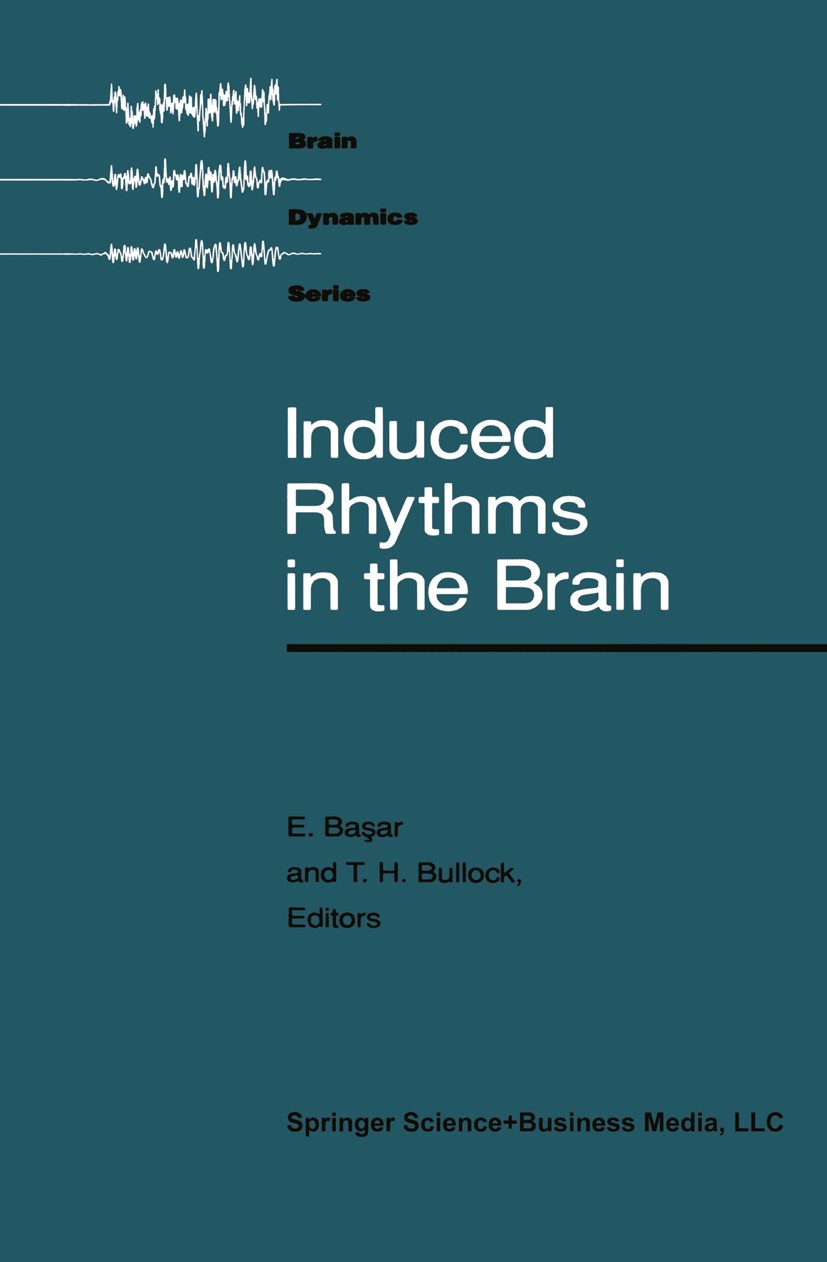 | | 描述 | It is easy to imagine the excitement that pervaded the neurological world in the late 1920‘s and early 1930‘s when Berger‘s first descriptions of the electro- encephalogram appeared. Berger was not the first to discover that changes in electric potential can be recorded from the surface of the head, but it was he who first systematized the method, and it was he who first proposed that explanatory correlations might be found between the electroencephalogram, brain processes, and behavioral states. An explosion of activity quickly fol- lowed: studies were made of the brain waves in virtually every conceivable behavioral state, ranging from normal human subjects to those with major psychoses or with epilepsy, to state changes such as the sleep-wakefulness transition. There evolved from this the discipline of Clinical Electroencepha- lography which rapidly took a valued place in clinical neurology and neuro- surgery. Moreover, use of the method in experimental animals led to a further understanding of such state changes as attention-inattention, arousal, and sleep and wakefulness. The evoked potential method, derived from electro- encephalography, was used in neurophysiological researc | | 出版日期 | Book 1992 | | 關(guān)鍵詞 | brain; cortex; electroencephalography (EEG); neurology; neurons; perception; visual evoked potential (VEP) | | 版次 | 1 | | doi | https://doi.org/10.1007/978-1-4757-1281-0 | | isbn_softcover | 978-1-4757-1283-4 | | isbn_ebook | 978-1-4757-1281-0 | | copyright | Springer Science+Business Media New York 1992 |
The information of publication is updating

|
|


 |Archiver|手機版|小黑屋|
派博傳思國際
( 京公網(wǎng)安備110108008328)
GMT+8, 2026-2-9 08:20
|Archiver|手機版|小黑屋|
派博傳思國際
( 京公網(wǎng)安備110108008328)
GMT+8, 2026-2-9 08:20






 發(fā)表于 2025-3-21 18:21:08